For any print business, wasted stock is wasted money. So the better you can store and protect your print materials, the less stock you waste, the better quality you deliver to customers, and the more profit you generate.
In this post, we’ll explore seven production-focused ways to store print media properly, based on real-world print environments rather than theory.

Why correct print media storage matters
You probably don’t think of your stockroom or storage racks as a profit centre, but they have a direct impact on your bottom line. Every roll sitting unused is tied-up cash. Every vinyl, textile or banner that degrades before use is lost margin. Poor storage introduces risk long before ink hits the material.
Correct storage helps you:
- Reduce avoidable waste
- Maintain consistent print performance
- Reduce avoidable printer downtime
- Improve job reliability and throughput
Good storage isn’t about perfection. It’s about control, consistency and repeatability. Here are seven ways to do it.

How to store printing media properly
1. Store less and turn stock faster
We’ve written before about the ability of efficient stock control to boost your productivity. The flip side, of course, is that inefficient storage and stock control can damage it.
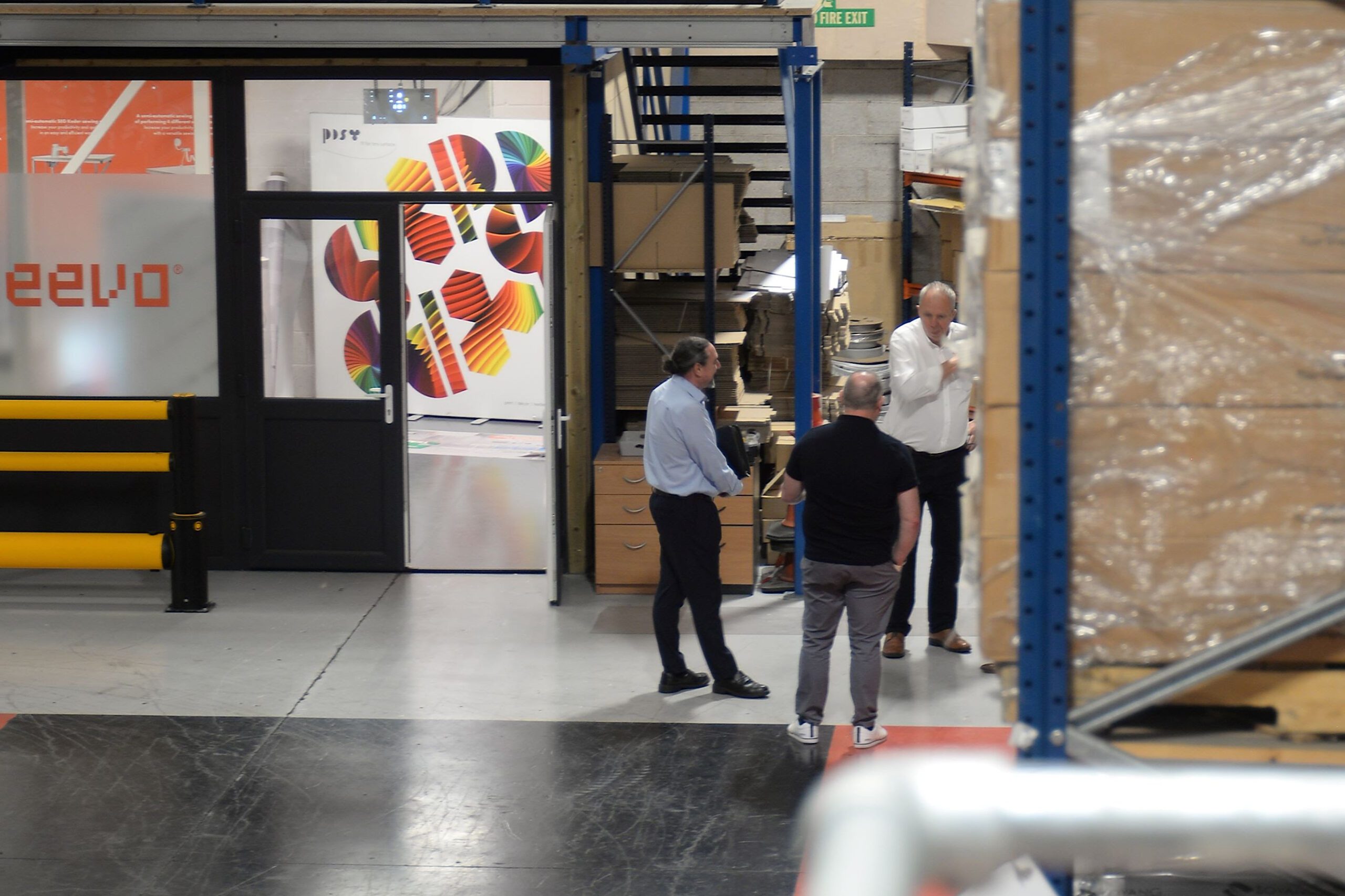
An efficient stock control means fewer rolls sitting idle, less handling, less storage space, less cash flow tied up, and fewer opportunities for the media to curl, absorb moisture, degrade, discolour, or become inconsistent to print.
Reliable availability and next-day delivery make it easier to keep stock lean without risking downtime and expensive printer servicing costs. Fewer rolls stored means fewer problems and faster access to working capital.
We explore how to manage print stock here.
2. Store media safely within the production areas
It’s not possible for every print shop, but if you have the space, use media racks, cabinets and trolleys to keep media accessible for day-to-day use while maintaining consistent print quality. Minimises the risk of physical damage, tearing and surface contamination from dust.
If space is limited, create a storage zone that either uses doors to protect materials or barriers to discourage staff from getting too close while working.
It’s always a good idea to store inks and chemicals separately to reduce the risk of odour transfer and chemical interactions with each other or the print substrate. Naturally, always check manufacturer guidance (and follow it).
3. Control temperature and humidity
Vinyl, textile, or banner substrates are highly sensitive to their environment. Fluctuations in temperature and humidity can lead to curling, cracking, moisture absorption and ink adhesion problems.
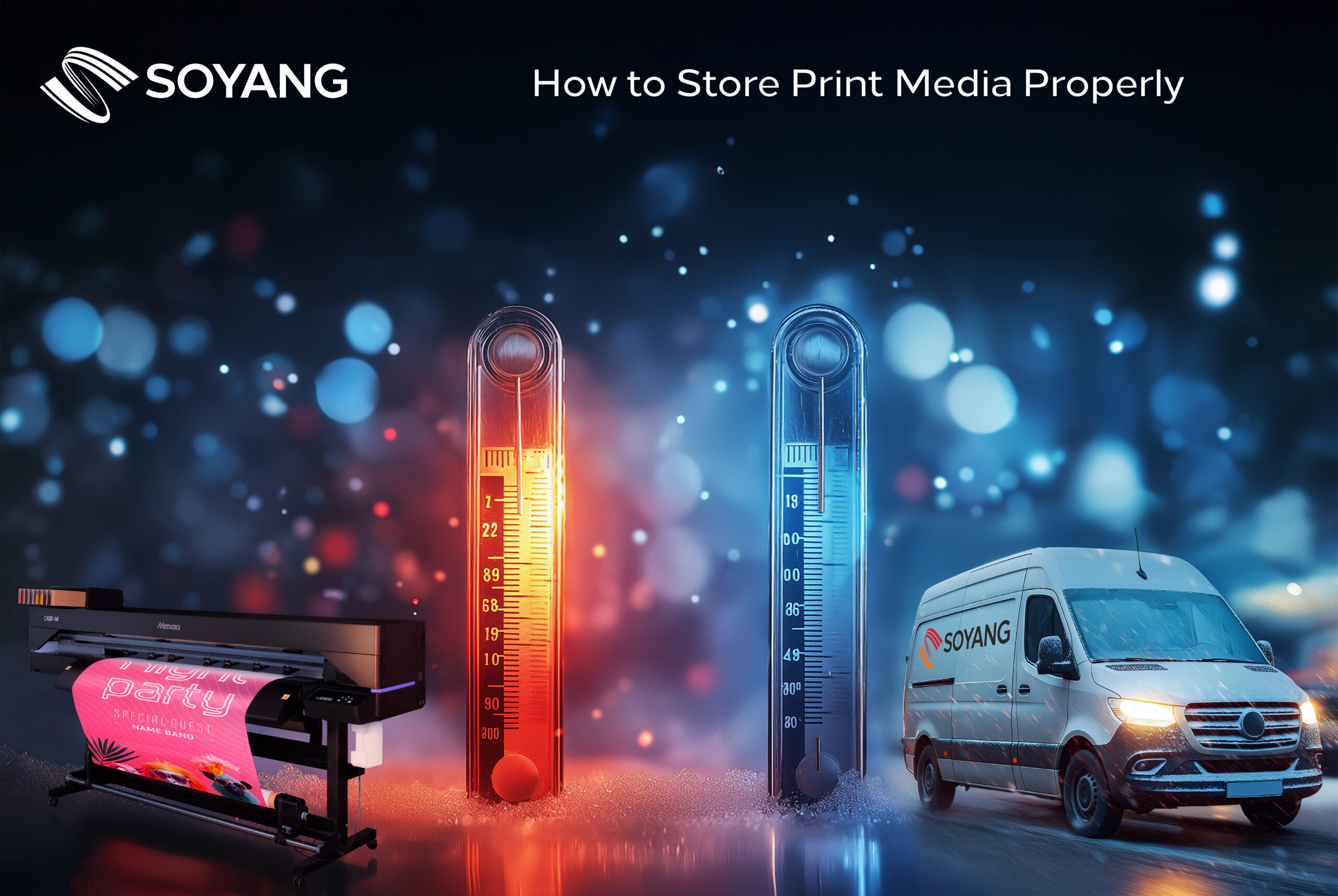
One of the most common causes of temperature-related issues is next-day media delivery. Material often arrives overnight in cold delivery vehicles and is taken straight into a warm print room and loaded onto warm printer heaters. This rapid temperature change can cause media to curl or cockle and, in more severe cases, lead to feeding issues that risk damaging the printer. Allowing the media time to acclimate before use helps protect both print quality and equipment.
As a general guideline, aim to store materials at a temperature between 18°C and 22°C with relative humidity around 50 percent. The key here isn’t necessarily about obsessing over heaters and dehumidifiers to achieve the perfect number – it’s more about consistency and keeping conditions within the same narrow band.
To avoid too great a fluctuation in temperature or humidity, keep stock away from heaters, air conditioning vents or external doors, and away from bright (and warm) sunlight. Speaking of which…
4. Minimise exposure to light
Extended exposure to light. Especially, direct sunlight can degrade coatings and weaken print adhesion over time.
If your storage area has windows or skylights, use blinds or covers to limit exposure and keep lights practical rather than bright.
Where light can’t be avoided, storing media in original packaging to protect the print surface and maintain consistency
5. Use FIFO to avoid stock getting old
Without proper storage processes, there’s a risk that new stock joins the front of the storage rack and becomes the first to be used, while older stock sits at the back of the shelf, getting older and more degraded. FIFO (first in, first out) is the simple principle that stops that.
Label rolls and sheets clearly with delivery dates. Then, arrange stock so that older material is always easiest to access. This is particularly important for coated papers, speciality media and inks with shorter shelf lives.
FIFO also helps with traceability. If a problem arises, it’s far easier to identify affected batches when stock is properly dated and rotated.
6. Don’t ditch the packaging
If you usually bin protective sleeves and original packaging when your stock delivery arrives, think again. They can play an important role in long-term storage.
Keep rolls in their plastic sleeves when not in use to protect against dust, moisture, and accidental scuffs that can appear in finished prints.
If you have to use open shelving, keep media in the original packaging to avoid dust and other airborne contaminants settling and affecting print consistency.
Avoid leaning sheets against walls, as this encourages warping and edge damage.
7. Set your processes, train your people
All the above only work if everyone knows what, where and how they’re supposed to store your printing materials. Make sure everyone has a checklist. Stick one to storage racks or the stockroom door so it’s easy for everyone to maintain consistency.
It’s also worth periodically revisiting storage processes during staff training so everyone gets a nudge about the importance of sticking to processes.
Talk to Soyang
Got processes in place to keep your media in prime condition? The next step is working with a supplier that understands how materials behave in real production environments.
At Soyang, we supply print media engineered for consistency and reliable use across wide format, superwide and industrial print applications.
Talk to our team about selecting the right materials and storage options keeping them performing at the best from delivery to finished print.