Not all fabrics are created equal. Your choice of printing textiles can have major implications for production costs, speed and product longevity. In this post we’ll explore the differences between woven and knitted textiles. We’ll examine why some fabrics fray more than others. And we’ll look at ways of ensuring that when you’re choosing textiles for your print media, you make the right choice.

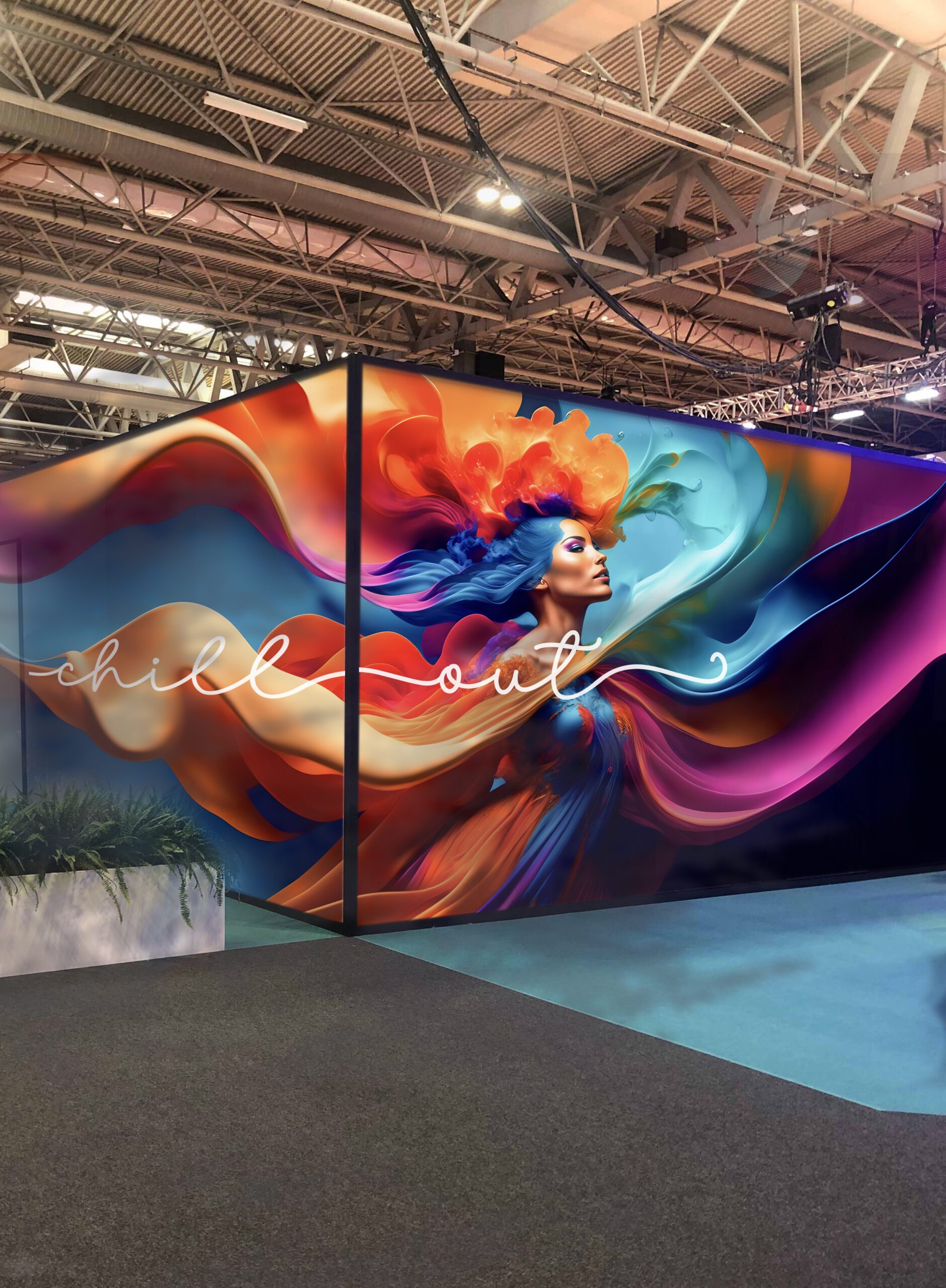
They’re the essential ingredient of the event tent, the instore, backlit ad, and the big, bold outdoor banner. Textiles are the more sustainable, more crease-resistant choice, bringing luxury, weather resistance and glare reduction to a wide range of print media.
But we’ll be the first to admit, they’re not always the simplest choice.
Why some textiles fray
Textile fabrics are typically created in one of two ways:
- Woven fabrics are created by interlacing yarns at right angles to create a sort of lattice. You’ll find these fabrics common in display flags and tent covers.
- Knitted fabrics are formed from interlocking loops of yarn. They’re generally more stretchable than woven textiles, which is why you’ll find them in soft signage and stretch display graphics.
As any print shop owner knows, fabrics don’t behave like paper when you cut them. Interrupt the loop or weave with a cut and you alter the structural integrity of the fabric, leaving threads unmoored from the ones around them. That’s why textiles fray.

What happens when textile print media frays
It depends on the fabric, the construction and the nature of the cut, but in general, fraying starts with loose threads. Woven fabrics are more likely to fray (and fray faster) than knitted ones, but either is susceptible, especially if you choose textiles with characteristics that don’t lend themselves to clean cutting (see below).
Gradually, the loose threads pull free from the fabric around them. Sometimes, cutting a fabric can cause the threads at the cut point to bunch together, distorting the edge.
Either way, the effect on the finished print product can be a less than high-end look, tearing during installation or reduced longevity as a few loose threads quickly become a larger problem.
Printers often resolve these issues with secondary finishing techniques like sewing, hemming, binding or using a heated knife to melt synthetic fibres and seal loose edges.
These techniques all take time, resource, effort and additional materials, though. They slow production speeds, increase production costs and, depending on how skilled the finisher is, result in (at best) inconsistency between products or (at worst) distortions.
A far better option is to choose a fabric that cuts cleanly from the outset.
Why choose textiles that cut cleanly?
It’s not just that choosing a clean-cut fabric addresses the issues we raise above. It’s that, in addition to cutting overall production costs and reducing production time, print materials designed to cut cleanly will result in sharper edges. They’ll deliver entirely consistent finishes in a way that secondary finishing can’t. And they’ll work better with flatbed cutters and digital cutting tables so there’s more potential for automation.
Which fabrics resist fraying?
Looking for a print textile that will give you clean, trouble-free cuts? Look for the following:
1. Weight/density
Heavier/denser fabrics will offer greater cutting stability than lighter weight textiles. Download spec sheets to find the weight in g/sq.m. The heavier the substrate, the denser the fabric is also likely to be which means there’s less potential for yarn movement.
2. Knitted fabrics good; warp-knitted better
As noted above, a knitted fabric will cut more cleanly, and be less eager to fray than a woven fabric. But for the best fray resistance, look for warp-knitted fabrics. These deliver high stability thanks to the zig-zag layout of the knitted yarn. We identify warp-knitted fabrics on our print material spec sheets under “weave method”.
3. Yarn
Polyester will typically seal or stabilise better than natural fibres. You’ll find the yarn type in the description of all our print textiles.
4. Coatings
Not very common, but some print fabrics have edge-stabilising coatings, which will further help to protect clean cuts.
How to choose the right clean-cut print textile
- Understand the application: Will the material need to survive a week indoors at the expo or a year outside on the side of a stadium? Understanding the nature of the project will help narrow the range of appropriate materials.
- Understand your fabric options: Always download the spec sheets to understand what yarn, weight, density and weave you’re looking at. You’ll find a spec sheet for all our printing materials.
- Check your ideal textile will work well with your print process: Even though we’re focusing on cutting here, there’s little point choosing a fabric that will cut well but which won’t achieve good UV/latex/dye sublimation results. Check “ink printability” on the spec sheet.
- Test it yourself: Want to test how a fabric works on your cutting table? Tap/click ‘Order a sample book’, ask for a sample roll, and try cutting it yourself.
- Talk to us: Not sure you’re making the right choice? Have an unusual challenge and need a little help? Just ask.
Talk to Soyang
Explore our complete textile collection. And if you’d like to make sure you’re choosing the right fray-free fabric for your application, talk to us now.